New B2B AI SaaS venture · LinkedIn · Meta
LinkedIn and Meta: 130 leads for a new B2B SaaS product
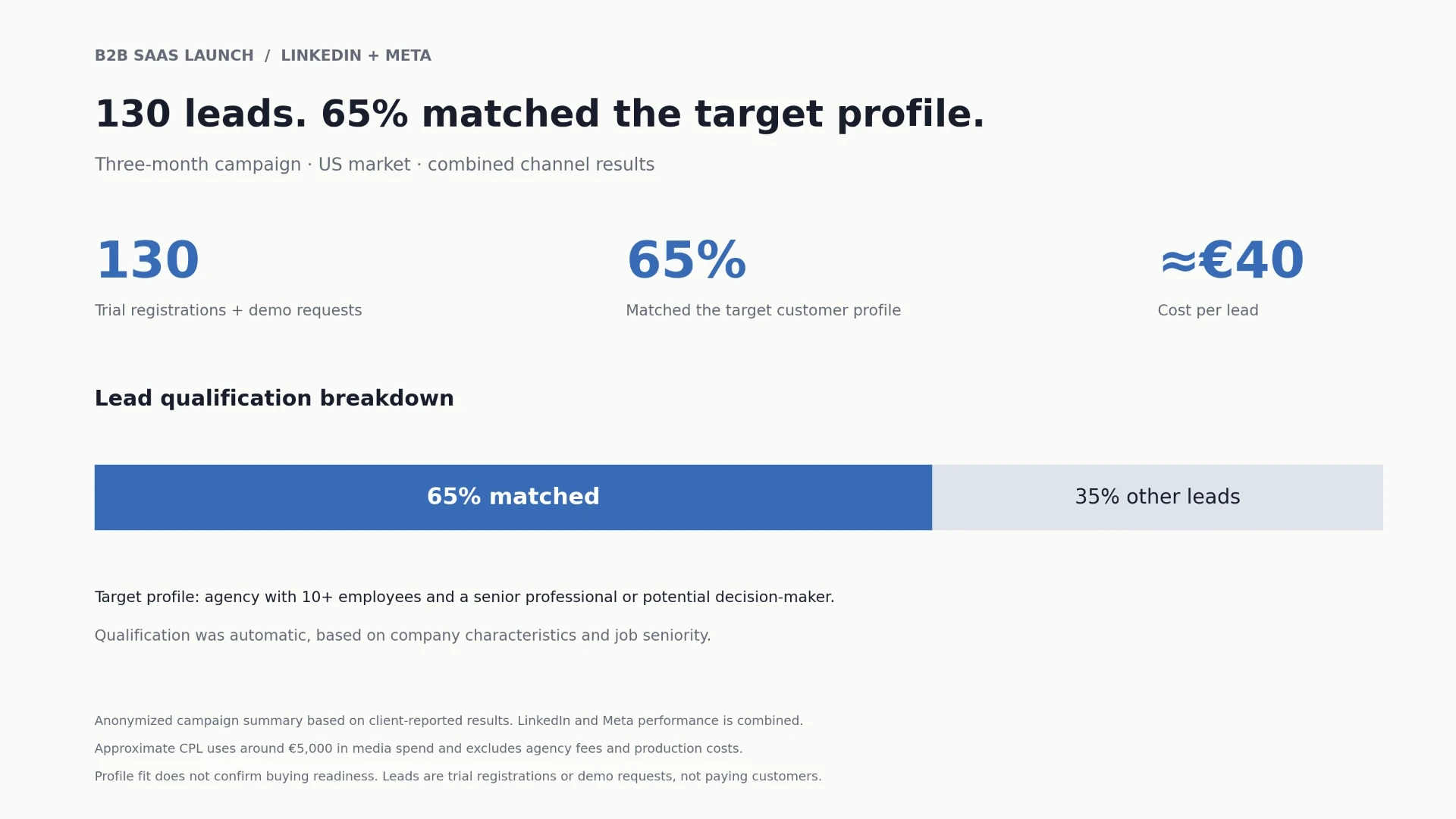
How Kraftvertising helped a new AI SaaS venture reach agency decision-makers in the United States and generate 130 trial registrations and demo requests in three months. 65% matched the target customer profile; cost per lead was approximately €40.
Combined LinkedIn and Meta results over three months in the US market: 130 free-trial registrations and demo requests. 65% matched automatic company-size and job-seniority criteria—not sales-validated opportunities or confirmed purchasing intent. No reliable platform-level split or paid-customer result is reported.
By Kraftvertising, led by founder Martin Brath · Anonymized client case study
Published
- 130
- Trial registrations + demo requests
- 65%
- Automatic target-profile match
- ≈€40
- Cost per lead · media spend only
- 3 months
- LinkedIn + Meta combined · US
The client
An established company launched a new AI SaaS venture, allocating a team of up to 10 employees and providing funding from the parent business.
The product served marketing agencies, with agency leaders and senior professionals as potential buyers. It offered a free trial so users could experience the software before deciding whether to purchase.
The company hired Kraftvertising to introduce the product to relevant audiences and generate initial demand in the US market.
The challenge
The brand was new, and potential customers needed an explanation of what the software did and how it could help their agency.
The campaign needed to reach a specialist professional audience, demonstrate the product’s value, and turn interest into trial registrations or demo requests.
LinkedIn offered ways to identify relevant agencies and professionals. Reaching a comparable audience on Meta required a different approach.
Our approach
LinkedIn: identifying relevant agencies and professionals
We compiled company lists and identified relevant professionals, then uploaded these audiences to LinkedIn.
We created and tested different list variations to compare interest across audience groups.
This gave us a structured way to reach potential buyers and assess which audiences responded to the product.
Meta: building on an initial relevant audience
Working with the client’s marketing team, we used an email campaign promoting an industry report to bring relevant professionals to the website.
That initial traffic provided an audience for retargeting. We also used lookalike audiences to expand towards people with similar characteristics.
Creative: demonstrating the product
Kraftvertising developed the advertising copy and visual creative.
Screen recordings showed the software in use, helping potential customers understand its functionality before registering.
Comparison ads explained how the product differed from existing ways of completing the same work. The campaign team identified demonstrations and comparison ads as particularly effective formats.
How we defined and qualified leads
A lead was either a free-trial registration or a demo request.
Leads automatically met the target customer profile when they worked at an agency with at least 10 employees and held a senior role indicating potential decision-making responsibility.
This qualification combined company characteristics with job seniority. Registration or a demo request supplied the initial signal of interest.
The qualification did not require a sales conversation or confirmation of purchasing intent.
The results
Over three months, the combined LinkedIn and Meta campaigns generated 130 trial registrations and demo requests. 65% met the target customer profile: approximately 85 leads matching the company-size and seniority criteria.
Cost per lead was approximately €40, based on around €5,000 in media spend. These approximate figures exclude agency fees and production costs.
The campaign reached relevant agency professionals and generated measurable interest in a new SaaS product. Results were reported across LinkedIn and Meta together. A reliable platform-level split was unavailable, so these figures should be read as combined campaign results.
What happened after registration
Trial users could start using the software and evaluate it directly. The product experience then played the central role in converting that interest into a purchase.
This case study measures lead generation and audience fit. It does not report paid-customer conversion or revenue.
Our scope
Kraftvertising owned advertising strategy, copywriting, visual design, campaign management, and reporting across LinkedIn and Meta.
Landing-page development remained outside our scope.
Measurement and limitations
Client identity and branding are withheld. Results cover a three-month campaign in the United States and combine LinkedIn and Meta performance, based on client-reported results. A reliable platform-level split was unavailable. Media spend (around €5,000) and cost per lead (approximately €40) are approximate and exclude agency fees and production costs. Approximately 85 profile-matched leads is a rounded figure based on 130 leads and the reported 65% rate. Qualification was automatic, based on an agency with at least 10 employees and job seniority—not a sales conversation, a sales-validated opportunity or confirmation of purchasing intent. Leads include free-trial registrations and demo requests, not paying customers. Paid-customer conversion and revenue are not reported.
Related services and reading
Looking for LinkedIn lead generation support?
Kraftvertising helps B2B companies reach relevant professional audiences and generate demand through LinkedIn advertising, with complementary channels where appropriate.
Talk to us about your lead generation campaigns