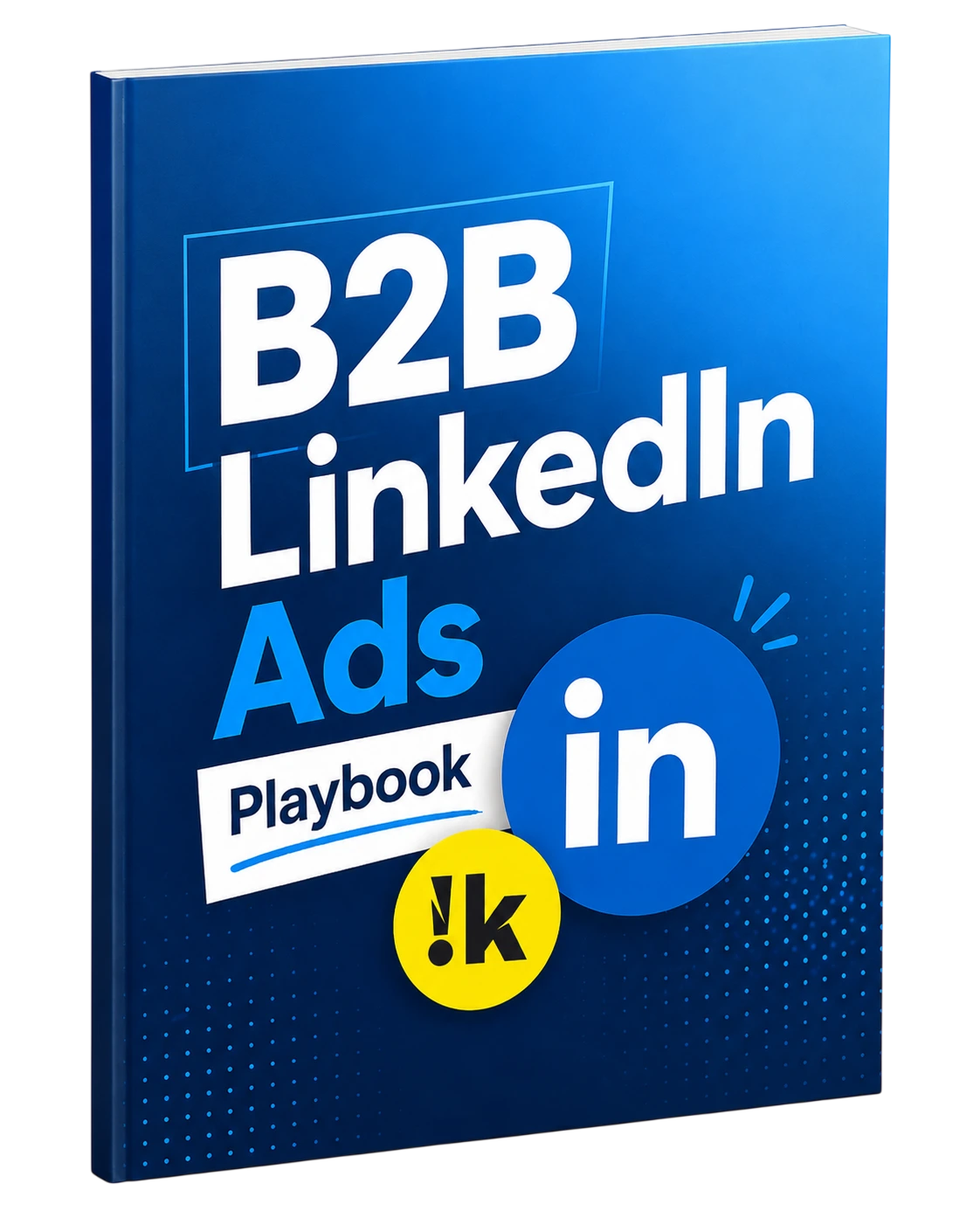
B2B LinkedIn Ads Playbook · 2026 Edition
B2B LinkedIn Ads Playbook for 2026
A strategic framework built from real B2B LinkedIn campaigns: how to reach the right companies, build familiarity, support outbound and measure more than leads.
What is inside the playbook?
Most B2B LinkedIn Ads problems do not start with targeting settings.
They start earlier: treating LinkedIn as a lead-generation platform only, expecting every impression to produce a click, running safe creative that nobody remembers, or measuring campaigns only through cost per lead.
This playbook explains how B2B companies should evaluate, structure and manage LinkedIn Ads — from channel fit and audience strategy to creative, outbound support, account-based campaigns and measurement.
It focuses on the strategic decisions that determine whether the right buyers become more likely to recognise, trust and shortlist your company.
What the playbook covers
When LinkedIn Ads are a fit
How to judge whether professional targeting gives you a meaningful advantage — and when Google, Meta or another channel may be the better first move.
Awareness, education and demand generation
Why LinkedIn is often strongest before buyers are actively searching, and how repeated exposure can make your company familiar before the buying trigger appears.
Target accounts and buying committees
How to reach the right companies, roles and seniority levels — including the wider group of people who influence a B2B purchase.
Creative that earns attention
Why the first seconds matter, how to make the company and category recognisable, and why professional B2B advertising should not mean invisible advertising.
LinkedIn Ads with outbound and Sales
How LinkedIn can make outbound feel less cold, support active opportunities and keep strategic accounts familiar with your company throughout the sales process.
Measurement beyond clicks and leads
How to evaluate company reach, seniority, frequency, video attention, Sales feedback and pipeline influence — not only cost per lead.
A few principles from the playbook
LinkedIn gives you access to attention. It does not guarantee that anyone will care.
Professional targeting can put your message in front of the right people. The creative still needs to make them stop, understand the category and remember the company.
A LinkedIn campaign can create value without producing a click.
A buyer may see your ads repeatedly and later respond to outbound, search your company, recognise your founder or choose you over an unfamiliar competitor.
LinkedIn is not a weaker version of Google Ads.
Google captures demand that already exists. LinkedIn helps build familiarity and understanding before buyers start actively looking.
Safe B2B ads are often invisible ads.
If every ad uses the same generic claim, brand-colour background and professional stock image, the targeting may work while the impressions create almost no lasting value.
The buying committee matters more than the individual click.
The person who uses the product may not control the budget. The person who controls the budget may not understand the operational problem. LinkedIn can help reach more of the people involved in the decision.
Inside the B2B LinkedIn Ads Playbook
Channel fit, market maturity and strategic goals
How to decide whether LinkedIn should be used for awareness, education, demand generation, direct response, account-based marketing or outbound support.
LinkedIn versus Google, Meta and other channels
How the platforms perform different jobs, when Google should come first, when LinkedIn has the stronger role and how the channels can work together.
Audience strategy and account targeting
Company lists, industries, company size, job functions, seniority, geography, departments, named accounts and the different people inside a buying committee.
Creative, recognition and the first seconds
How to make the company, category and message clear immediately; how distinctive brand assets compound across impressions; and why the opening matters more than the caption.
Video, single-image ads, carousels and Thought Leader Ads
The strengths and limitations of each format, why autoplay video is often useful for education, and when company ads and personal content should run together.
LinkedIn Ads with outbound, CRM and account-based sales
How to build long-term target lists, warm priority outbound accounts, stay visible during the sales process and support open, stalled and closed-lost opportunities.
Lead Gen Forms and conversion paths
When LinkedIn forms make commercial sense, why they are usually stronger for high-value and sales-led offers, and when they create unnecessary friction.
Budget, reach and frequency
How audience size, account value, geography and desired frequency influence budget — and why spending more against a narrow market can become wasteful.
Measurement beyond cost per lead
Target-account reach, company-level delivery, seniority, video attention, branded search, direct recognition, Sales feedback and pipeline influence.
Agency ownership and client collaboration
What a B2B LinkedIn Ads agency should manage, what it needs from the client, and how channel strategy, creative, Sales insight and market knowledge should work together.
LinkedIn Ads should make every future touchpoint stronger
A prospect may see an ad and continue scrolling.
Later, they may receive an outbound email, see a founder post, meet your team at an event, search Google or enter a sales conversation.
The LinkedIn impression may not receive credit for the conversion.
But it can make the company name feel familiar, the message easier to understand and the next interaction less cold.
That is the role LinkedIn Ads can play in a longer B2B buying journey.
Read the related deep-dives
The playbook gives the complete strategic framework. These articles go deeper into three parts of it.
When Are LinkedIn Ads Worth It for B2B Companies?
LinkedIn Ads are not automatically worth it because a company sells B2B. A decision framework for when the channel deserves budget — and when it doesn't.
Read the article →
LinkedIn Ads vs Google Ads for B2B: Where Should the Next Euro Go?
Google captures demand that already exists. LinkedIn builds familiarity before buyers search. A practical decision framework for B2B companies.
Read the article →
LinkedIn Ads for B2B: Lessons from a LinkedIn Marketing Agency
Most B2B companies fail with LinkedIn Ads because they expect it to behave like Google Search. Here's how it should actually be run.
Read the article →Frequently asked questions
What is the B2B LinkedIn Ads Playbook?
A free strategic playbook explaining how B2B companies should evaluate, structure and manage LinkedIn Ads — from channel fit and audience strategy to creative, outbound support, account-based campaigns and measurement beyond cost per lead.
Who is the LinkedIn Ads playbook for?
B2B founders, marketing leads and sales-led teams who want to reach specific companies and buying committees, build familiarity before buyers actively search, and support outbound and pipeline — not just generate form fills.
Is the B2B LinkedIn Ads Playbook really free?
Yes. Enter your name, email and company and the PDF opens in a new tab. There is no paywall and no drip sequence required to read it.
What does the playbook cover?
Ten areas: channel fit and strategic goals, LinkedIn versus Google and Meta, audience and account targeting, creative and recognition, ad formats, outbound and CRM support, Lead Gen Forms, budget and frequency, measurement beyond cost per lead, and agency collaboration.
Does the playbook cover LinkedIn Lead Gen Forms?
Yes. It explains when LinkedIn forms make commercial sense, why they are usually stronger for high-value and sales-led offers, and when they create unnecessary friction.
Does it explain how LinkedIn Ads work with outbound and Sales?
Yes. The playbook covers warming priority outbound accounts, staying visible during the sales process and supporting open, stalled and closed-lost opportunities.
Who wrote the B2B LinkedIn Ads Playbook?
Martin Brath, founder of Kraftvertising, a B2B advertising agency running LinkedIn Ads, Google Ads and Meta campaigns for SaaS and service companies.